

She was the last act of the night.
The audience was tired. The judges were slouched in their chairs, sipping lukewarm coffee and counting down the minutes until they could leave. Most of the day had been filled with so-so auditions—some good, some awkward, a few outright disasters. No one expected anything magical to happen at this point. Especially not from her.
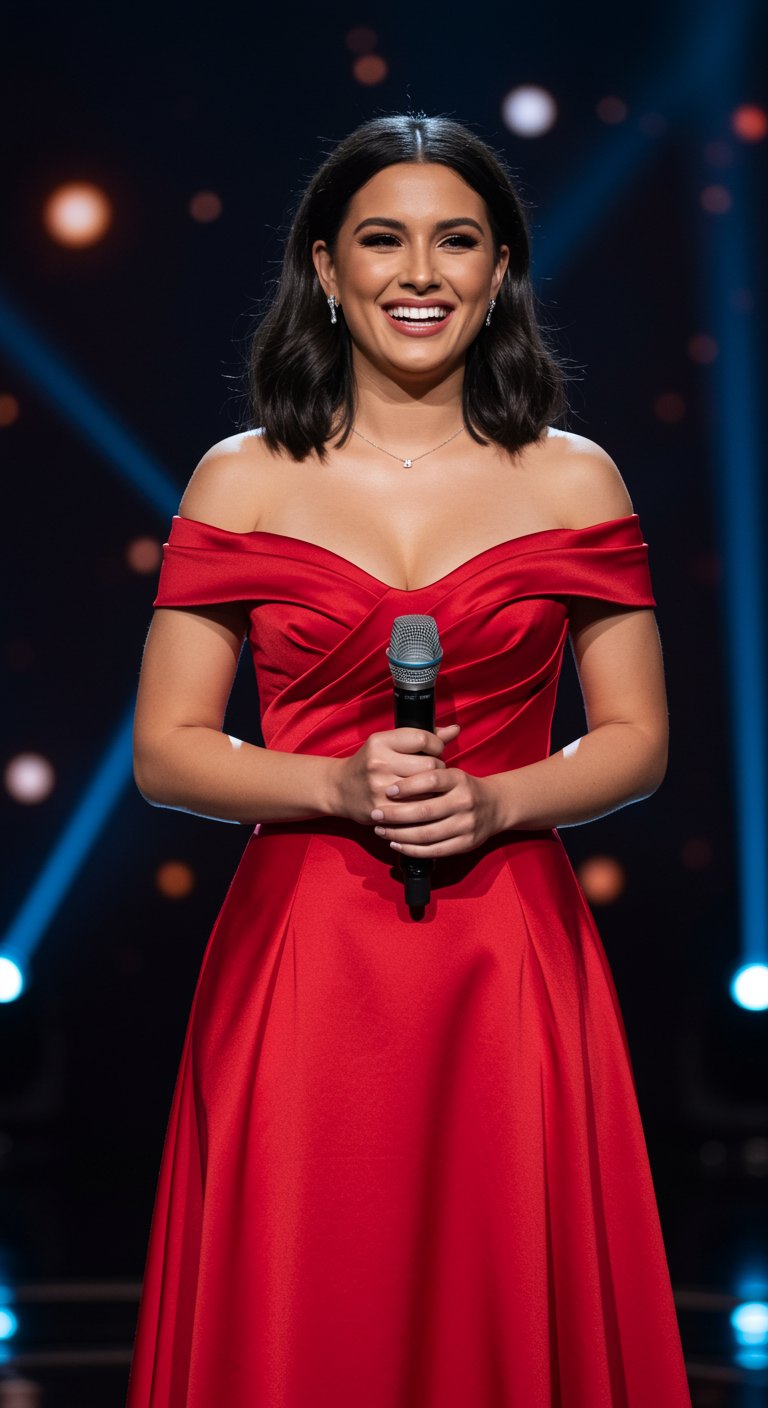
She walked onstage quietly, almost unnoticed. A girl in a plain blue dress, no sparkles, no makeup tricks, no entourage. Just her. Small frame. Big eyes. Clutching the mic like it might disappear if she let go.
“Name?” one of the judges asked, barely glancing up.
“Sarai,” she said, softly. “I’m twenty-one.”
“What are you singing for us today?”
“It’s an old soul song. One my mom used to sing to me when I was little.”
The judges exchanged polite smiles—the kind you give when you’re not expecting much but want to be kind. One of them leaned toward the mic, trying not to sound bored. “Alright, Sarai. Show us what you’ve got.”
The music started. Just a slow piano. A few people in the crowd started whispering. Someone in the back coughed.
And then Sarai sang.
The first note was like a ripple in still water. Pure, rich, and heartbreakingly beautiful. It didn’t just echo through the room—it settled in it. The judges sat up straighter. People in the crowd leaned forward. You could feel it—that electric shift, that moment when everyone realizes something unforgettable is happening.
Her voice wasn’t just good. It was alive. Every word she sang felt like it had been lived. The pain. The joy. The longing. You didn’t just hear it—you felt it in your bones. It was the kind of voice that made strangers cry and skeptics believe.
By the chorus, the auditorium was completely silent except for her voice and the trembling notes of the piano. One judge actually dropped his pen. Another covered her mouth, stunned.
And Sarai never wavered. She didn’t over-sing or show off. She just told the truth with her voice—raw, soulful, and achingly honest.
When she finished, the room stayed quiet for a moment longer, like nobody wanted to break the spell.
Then… thunderous applause.
The audience was on their feet. The judges, too. One of them had tears streaming down her face. Another just shook his head and muttered, “Where has she been hiding?”
When the cheers finally died down, one of the judges spoke first.
“Sarai,” he said, “I don’t say this lightly… but that was one of the most powerful auditions I’ve ever seen. Your voice doesn’t just sing—it speaks. You brought something into this room that none of us expected, and I can’t thank you enough for that.”
Sarai’s hands were shaking. She smiled through tears. “I almost didn’t come,” she admitted. “I’ve been told I’m too quiet, too ordinary, that my voice is ‘nice’ but forgettable. I just… I wanted to prove to myself that I could do this.”
“You didn’t just prove it,” the judge said. “You owned this stage.”
And just like that, a star was born.
By the next morning, her audition had gone viral. Millions of views. Thousands of comments. People saying her voice reminded them of legends. Fans begging for an album. Musicians reaching out to collaborate. The quiet girl in the blue dress had touched hearts around the world.
But for Sarai, the most meaningful moment came later that night, when she checked her phone and saw a text from her mom.
It read: “You sounded just like I did when I used to sing that song to you. I’m so proud of you, baby. You didn’t just sing—you soared.”